Why Hydraulic Press Technology Matters in Modern Manufacturing
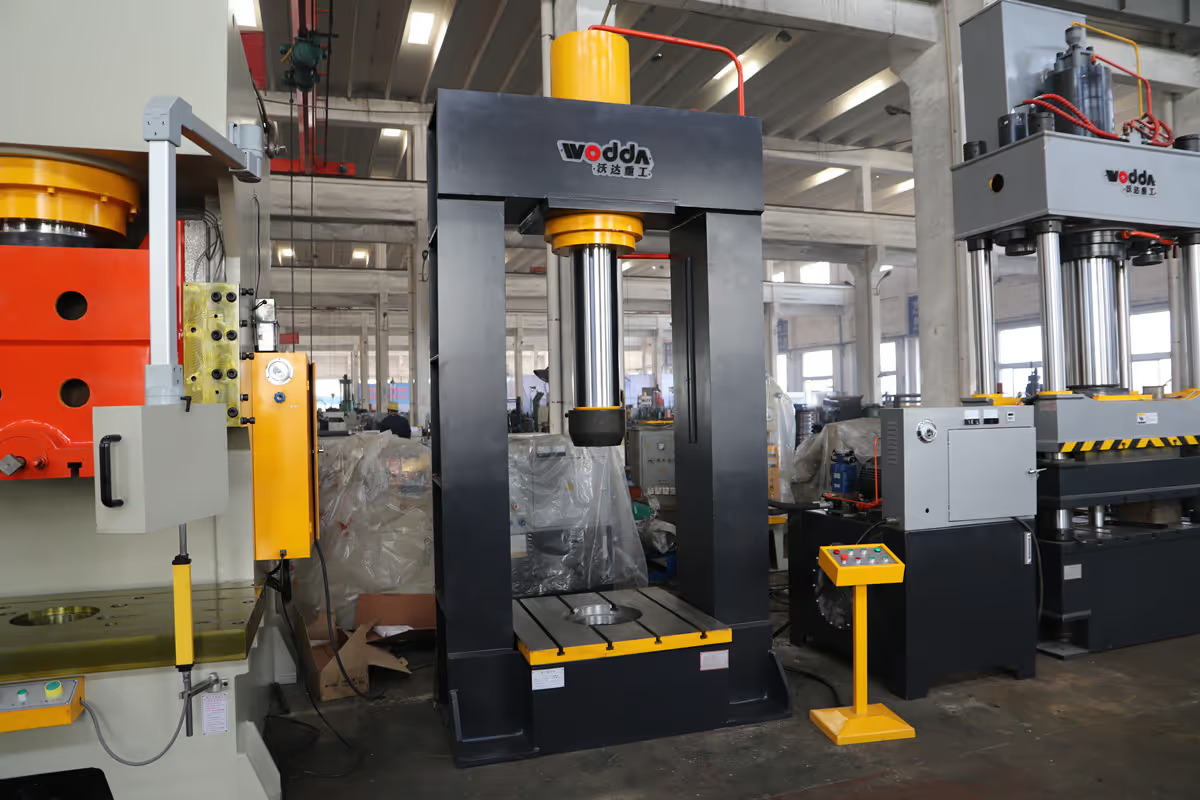
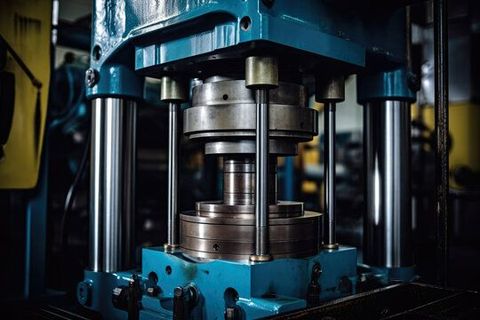
Hydraulic press machines play a critical role in industrial production and material processing. Their ability to generate high compressive force while maintaining precise control makes them essential for shaping and forming materials.
Manufacturers rely on hydraulic press equipment for operations that require uniform pressure and repeatable results. Compared with mechanical pressing systems, hydraulic presses allow operators to control force, speed, and stroke length more easily.
Key industries that depend on hydraulic press systems include:
-
Automotive component manufacturing
-
Aerospace metal forming
-
Construction equipment production
-
Industrial machinery fabrication
-
Plastic and composite molding
The importance of hydraulic press technology becomes clearer when examining the types of problems it solves.
Common Manufacturing Challenges Addressed by Hydraulic Press Machines
Manufacturing Challenge
| Manufacturing Challenge | Hydraulic Press Solution |
|---|
| High force required for metal forming | Hydraulic pressure multiplies input force |
| Precision shaping of components | Controlled pressure and stroke length |
| Complex material forming | Adjustable pressure profiles |
| Consistent production quality | Stable hydraulic system control |
In industries that produce metal components, hydraulic press machines are used for operations such as stamping, forging, bending, punching, and deep drawing. These processes require reliable force application and stable pressure distribution.
Hydraulic presses are also widely used in recycling and waste management industries. Metal scrap compaction and material baling depend on powerful compression systems capable of handling dense materials.
Another important advantage is adaptability. Hydraulic press systems can be adjusted for different materials, including:
-
Steel and aluminum
-
Rubber compounds
-
Composite materials
-
Plastic polymers
This flexibility makes hydraulic press machines suitable for both heavy industrial environments and specialized laboratory applications.
Recent Developments and Technology Trends in Hydraulic Press Systems
Industrial machinery technology continues to evolve, and hydraulic press machines are becoming more advanced through digital control systems and energy-efficient engineering.
One significant development is the integration of smart hydraulic press control systems. Modern machines often include programmable logic controllers (PLC) and digital monitoring tools that allow operators to track pressure, stroke length, and cycle times in real time.
Recent industry trends in hydraulic press equipment include:
-
Servo-hydraulic systems for precise motion control
-
Energy-efficient hydraulic pumps
-
Digital pressure monitoring sensors
-
Automated press cycle programming
-
Predictive maintenance through data monitoring
Manufacturers have also been focusing on improving industrial automation compatibility. Hydraulic press machines are increasingly integrated into automated production lines, where robotic systems handle material loading and unloading.
Emerging Hydraulic Press Technology Trends
| Technology Trend | Industry Impact |
|---|
| Servo-hydraulic drives | Greater precision and energy efficiency |
| Digital pressure monitoring | Improved machine safety and diagnostics |
| Automated press systems | Faster production cycles |
| Smart manufacturing integration | Data-driven production management |
Energy efficiency has become another focus area. Traditional hydraulic systems can consume significant power during operation. Newer hydraulic press models incorporate variable-speed pump technology to reduce unnecessary energy usage.
Industrial engineers are also exploring environmentally friendly hydraulic fluids that improve sustainability while maintaining system performance.
These advancements reflect the broader movement toward Industry 4.0 manufacturing environments, where machines communicate data to centralized monitoring systems to improve productivity and equipment reliability.
Regulations, Safety Standards, and Industrial Policies
Hydraulic press machines operate under strict safety regulations due to the high levels of force involved in their operation. Governments and industrial regulatory bodies have established workplace safety standards to reduce the risk of mechanical injuries and equipment failures.
Several regulatory frameworks influence how hydraulic press machines are designed and used in manufacturing facilities.
Important regulatory areas include:
-
Machine safety standards
-
Workplace hazard prevention rules
-
Industrial equipment inspection requirements
-
Hydraulic system pressure safety guidelines
Manufacturing facilities often follow Occupational Safety and Health Administration (OSHA) guidelines for machine guarding and operational safety procedures. These rules emphasize the importance of protective barriers, emergency stop systems, and operator training.
In addition, global industrial standards organizations such as the International Organization for Standardization (ISO) provide guidelines for machine safety and hydraulic system performance.
Common safety features required in hydraulic press equipment include:
-
Emergency stop switches
-
Pressure relief valves
-
Safety guards and light curtains
-
Two-hand control systems
Many governments also support industrial modernization initiatives that encourage factories to adopt advanced manufacturing technologies. These programs often promote automation, energy-efficient machinery, and improved industrial safety practices.
Compliance with these regulations helps ensure that hydraulic press machines operate safely while maintaining consistent production quality.
Useful Tools and Resources for Understanding Hydraulic Press Systems
Learning about hydraulic press machines becomes easier with access to educational tools and engineering resources. Engineers, students, and industrial technicians often use specialized tools to analyze hydraulic pressure systems and machine performance.
Several practical resources help users understand hydraulic press technology:
Engineering Calculators
-
Hydraulic force calculation tools
-
Pressure and cylinder sizing calculators
-
Industrial load capacity estimators
Design and Simulation Software
-
Hydraulic system simulation programs
-
CAD software for machine design
-
Finite element analysis tools for stress testing
Technical Documentation Resources
-
Industrial engineering manuals
-
Hydraulic system design guides
-
Manufacturing process reference materials
Training and Learning Platforms
-
Mechanical engineering learning portals
-
Industrial automation tutorials
-
Manufacturing technology training modules
These resources help engineers evaluate important factors such as pressure levels, cylinder size, and material strength before implementing hydraulic press systems in industrial operations.
Basic Hydraulic Force Relationship
| Component | Function |
|---|
| Small piston | Receives input force |
| Hydraulic fluid | Transfers pressure |
| Large piston | Produces amplified output force |
| Press frame | Supports compression structure |
Understanding this relationship helps explain why hydraulic press machines can produce extremely large forces from relatively small input energy.
Frequently Asked Questions About Hydraulic Press Machines
What is the basic working principle of a hydraulic press machine?
A hydraulic press operates using Pascal’s Law, which states that pressure applied to a confined fluid is transmitted equally throughout the fluid. By using cylinders of different sizes, the system multiplies the input force and produces a larger output force.
What industries commonly use hydraulic press equipment?
Hydraulic press machines are widely used in automotive manufacturing, aerospace component production, metal fabrication, construction equipment manufacturing, plastic molding, and recycling operations.
How is hydraulic press force measured?
The force generated by a hydraulic press is typically measured in tons. Industrial presses may range from small laboratory presses with a few tons of force to large manufacturing presses capable of several thousand tons.
What are the advantages of hydraulic press technology compared with mechanical presses?
Hydraulic presses provide adjustable pressure control, smoother operation, variable speed settings, and the ability to maintain full force throughout the pressing stroke. These characteristics make them suitable for complex forming operations.
What safety precautions are important when operating hydraulic press machines?
Operators must follow machine guarding rules, use protective safety barriers, maintain proper hydraulic pressure limits, and ensure emergency stop mechanisms are functioning correctly.
Conclusion
Hydraulic press machines are a foundational technology in modern industrial manufacturing. By using hydraulic pressure to amplify force, these machines enable precise shaping, forming, and compression of materials across many industries.
Their versatility allows them to support applications ranging from metal fabrication to composite material molding. The ability to control pressure and motion makes hydraulic presses suitable for both high-volume production and specialized engineering tasks.
Advancements in automation, digital monitoring, and energy-efficient hydraulic systems continue to improve the performance and safety of these machines. At the same time, regulatory standards ensure that hydraulic press equipment operates within established safety guidelines.
Understanding the fundamentals of hydraulic press technology helps engineers, technicians, and industry professionals appreciate how fluid power systems contribute to modern manufacturing processes. As industrial automation and smart manufacturing environments expand, hydraulic press machines will remain an important component of production infrastructure.