Insights Into Smart Farming Platforms: Basics, Overview, and Modern Farming Knowledge
Smart farming platforms refer to digital agriculture systems that combine data, software, and connected devices to support modern agricultural decision-making. These platforms bring together precision agriculture software, farm management systems, and agricultural data analytics into a single digital environment.
The concept exists because farming has become more complex. Farmers today manage variable soil conditions, changing weather patterns, water availability, pest pressure, and market expectations at the same time. Traditional methods based only on experience or observation are no longer sufficient for consistent productivity and resource efficiency.
Smart farming platforms were developed to transform raw farm data into structured insights. By using satellite imagery, connected sensors, GPS-enabled machinery, and cloud-based agriculture software, these platforms help convert field-level information into actionable farming knowledge.
Importance: Why Smart Farming Platforms Matter
Smart farming platforms matter because agriculture now faces pressure to produce more food with fewer resources. These platforms directly affect farmers, agronomists, cooperatives, researchers, and policy planners.
Key problems they address include:
Limited visibility into soil health, crop growth, and field variability
Inefficient use of water, fertilizers, and energy
Difficulty predicting yield outcomes and pest risks
Manual record-keeping that increases errors and delays
For small and large farms alike, digital farm management tools improve operational clarity. Precision agriculture platforms support informed decisions rather than reactive ones. This leads to better crop monitoring accuracy, improved resource optimization, reduced environmental impact, and stronger traceability and compliance records. Food supply chains also benefit from improved forecasting, while governments gain access to anonymized data for sustainability programs.
Recent Updates: Trends and Developments
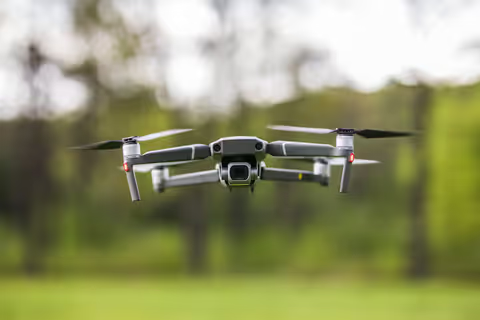
In the past months, smart farming platforms have continued to evolve toward more integrated and automated systems. Several notable trends have emerged. Artificial intelligence-driven crop analytics are now more common, analyzing satellite and drone imagery to detect stress patterns earlier in crop cycles. These insights are delivered through simplified dashboards designed for non-technical users.
Interoperability has improved across digital agriculture tools. Farm management software now supports smoother data exchange between machinery, weather data systems, and soil monitoring devices. This reduces data silos and improves workflow efficiency. Another noticeable shift is the growing emphasis on climate-resilient agriculture data, including advanced weather modeling and rainfall forecasting. Farmers increasingly rely on smartphone-based dashboards for real-time alerts and field logs while working.
Laws or Policies: Regulatory and Government Influence
Smart farming platforms are influenced by agricultural policies, data governance frameworks, and environmental regulations. Governments in many regions promote digital agriculture adoption through structured programs.
Key policy-related areas include:
Data privacy rules governing farm data ownership and sharing
Environmental compliance monitoring for water usage and fertilizer application
National agriculture digitization missions supporting precision farming adoption
Standardized reporting formats for soil health and crop insurance schemes
Regulatory attention is also growing around the ethical use of agricultural data. Policies emphasize secure data storage, consent-based sharing, and clear data usage boundaries within farm management systems. These platforms help improve transparency without altering farmer autonomy.
Tools and Resources: Helpful Digital Farming Solutions
Smart farming platforms consist of multiple tools working together to support agricultural planning and monitoring. Common categories include precision agriculture software, farm management systems, agricultural IoT platforms, and remote sensing dashboards.
Overview of Digital Farming Tools
Traditional vs Smart Farming Comparison
FAQs: Common Questions About Smart Farming Platforms
What is a smart farming platform?
A smart farming platform is a digital system that combines farm data, analytics, and monitoring tools to support agricultural decision-making.
Do smart farming platforms replace farmers’ experience?
No. These platforms complement experience by providing data-backed insights that support better judgment.
Are smart farming platforms only for large farms?
They can be used by farms of different sizes. Many tools are designed to scale based on land area and crop type.
What type of data do these platforms use?
They use satellite imagery, sensor readings, weather data, machinery data, and manual farm records.
How do smart farming platforms support sustainability?
They help optimize input use, reduce waste, monitor environmental impact, and improve long-term soil and crop health.
Conclusion
Smart farming platforms represent a structured shift toward data-informed agriculture. By integrating precision agriculture software, farm management systems, and agricultural data analytics, these platforms help modern farming respond to complexity with clarity.
Their value lies not in automation alone, but in knowledge generation. Farmers gain timely insights, policymakers gain better planning data, and food systems become more resilient. As digital agriculture continues to mature, smart farming platforms are likely to remain a foundational element of sustainable and informed agricultural practices.